After the US and Israel initiated hostilities against Iran on February 28—sparked by the killing of Iran’s Supreme Leader Ayatollah Ali Khamenei—Washington’s calculation was straightforward: force Tehran into a quick surrender through the application of overwhelming military power. However, nearly six months later, that calculation faces serious scrutiny in the waters of the Strait of Hormuz.
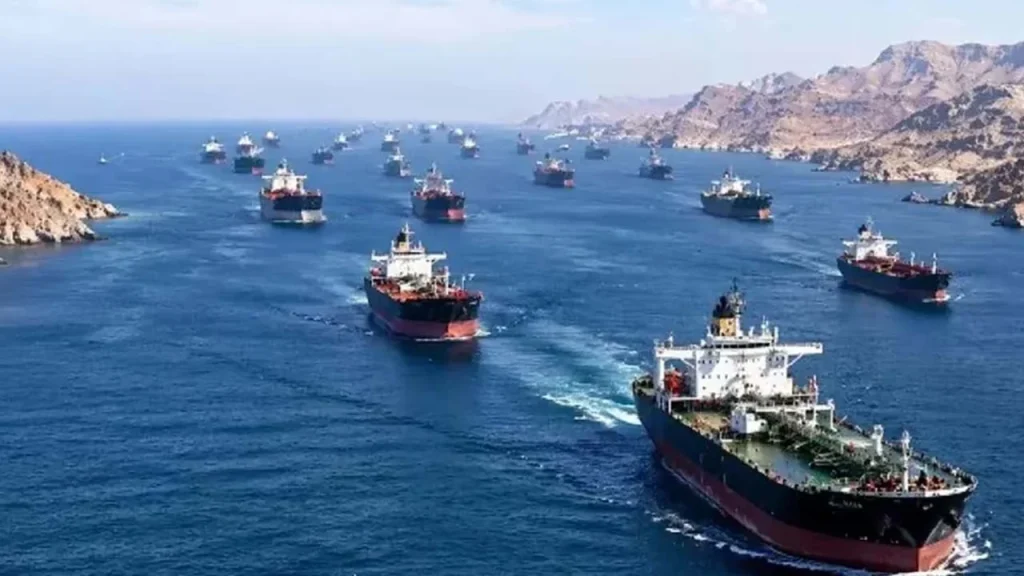
With a sunken tugboat, the death or disappearance of nearly a dozen sailors, and a standoff in this vital waterway—through which roughly a quarter of the world’s seaborne oil passes—the Hormuz crisis stands as a prime example that military dominance does not guarantee political victory.
Iran Shuts the Strait Instead of Surrendering
In response to Khamenei’s killing, Iran chose not to surrender; instead, it effectively shut down the Strait of Hormuz. The Islamic Revolutionary Guard Corps (IRGC) announced that any vessel owned by the US, Israel, or their allies attempting to transit the strait would be considered a legitimate target.
A protracted conflict ensued. The US launched strikes against Iran’s ballistic missile infrastructure and drone facilities. In retaliation, Iran employed tactics such as drone attacks on commercial vessels and the laying of naval mines. The naval blockade fluctuated in intensity—tightening and easing—and was reimposed whenever diplomatic talks collapsed.
By April, US Central Command reported that dozens of ships had been intercepted and several seized. Washington estimated that this cost Iran approximately $500 million daily. Yet, despite such immense pressure, the Strait of Hormuz has not reopened on US terms.
Mounting Pressure on the US Naval Fleet
The impact of this prolonged conflict is now visible on US warships as well. Reports indicate that some sailors have been deployed for over 250 days.
This extended deployment has led to issues such as food shortages, contaminated water, faulty piping, and mold infestations in living quarters. Family members of the sailors have also reported rising levels of stress and fatigue on board the ships. There have even been allegations of some sailors attempting to jump overboard. In response to the situation, the US Navy has begun monitoring the sleep patterns and biometric data of approximately 1,600 sailors.
These incidents certainly do not prove that the United States has lost the war. However, they do provide visible evidence of the strain on a military system that has remained mired in conflict far longer than originally planned. The most significant issue is the lack of a clear timeline for the war’s conclusion or a public “exit plan.” Consequently, there is a growing risk that political patience will run out before military capabilities are exhausted.
Tehran’s New Claim to Control Hormuz
Meanwhile, capitalizing on the crisis, Iran is attempting to assert a claim that few considered possible before the war began. Tehran is effectively positioning itself as the governing authority of the Strait of Hormuz. In May, Iran established the “Persian Gulf Strait Authority” and declared that no vessel could transit the strait without its permission.
However, under international law, the waters of the Strait of Hormuz are divided between Iran and Oman, and Oman has not supported Iran’s unilateral claim. Top Iranian officials—including Parliament Speaker Mohammad Bagher Ghalibaf—have made it clear that Tehran has no intention of reverting to the pre-war management system of the strait.
Iran’s demands for reopening the strait are stringent. They include the lifting of the US naval blockade and sanctions, the complete withdrawal of US forces from the region, war reparations, and the release of seized Iranian assets.
These demands do not reflect the stance of a state on the verge of collapse; rather, they reveal the confidence of a nation that believes its adversary is running out of options before it does.
Three Difficult Paths for Washington
Nearly six months into the conflict, the Hormuz crisis has created a major strategic dilemma for Washington. Before the war, approximately 110 ships transited the strait daily; yet, despite the deployment of massive military force, the waterway has not been fully restored to normal operations. While the United States’ immense military might is effective at destroying infrastructure, it has proven less successful in securing a political settlement.
Washington now faces three primary risks: escalating tensions could drag Gulf nations into direct conflict and deal a severe blow to global energy markets; conversely, backing down without an agreement could be perceived as a defeat; and persisting with the conflict would increase the burden of long-term military and political costs.
US President Donald Trump has spoken of avoiding entanglement in protracted foreign wars while simultaneously adopting a hardline military stance against Tehran. This has created a conflict scenario where the definition of victory is ambiguous and the exit strategy remains uncertain.
Recently, Trump shared a map on social media designating the Strait of Hormuz as an area of US interest. However, the prevailing view is that such statements reflect Washington’s frustration more than they exert actual military or diplomatic influence.
Shifting Security Strategies of Gulf Nations
The crisis in the Strait of Hormuz has accelerated the Gulf nations’ long-standing strategy of “hedging,” or balancing interests. They remain dependent on Washington for security, as the US maintains the most powerful military presence in the Middle East. At the same time, however, these Gulf states are actively cultivating alternative relationships.