Although the United States and Iran have temporarily suspended direct military actions against each other, military and security analysts believe the conflict is far from over.
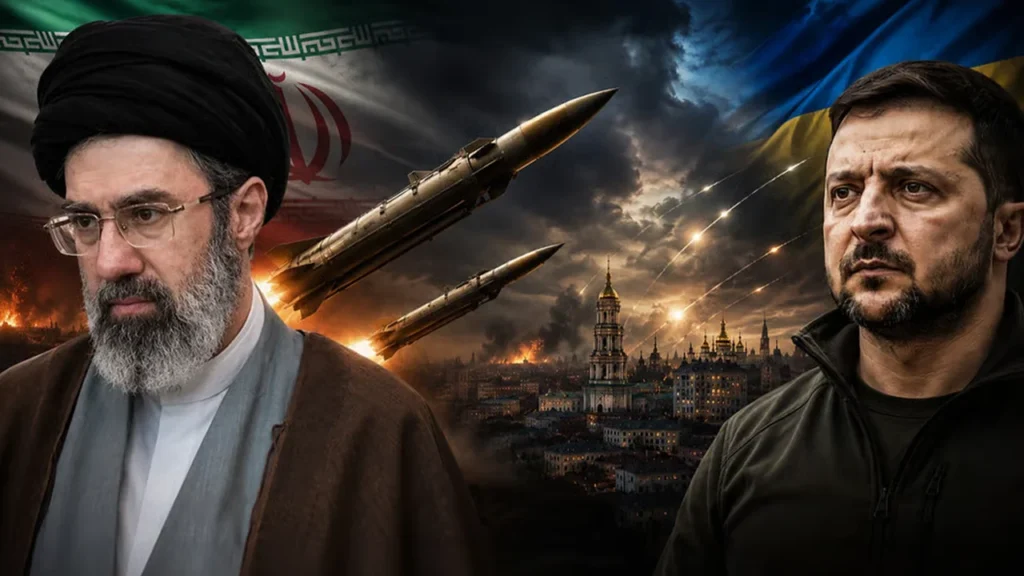
A recent Ukrainian attack on an Iran-linked vessel in the Caspian Sea has sparked fresh international concern: is Ukraine now becoming a new front in a direct conflict with Iran?
News of the attack on the Iran-linked ship in the Caspian Sea emerged on July 25. Since the incident, questions have arisen as to whether the Caspian region is transforming into a new battlefield in the ongoing Washington-Tehran conflict.
Analysts observe that while military tensions between the US and Iran remain high, sustaining a prolonged, high-intensity conventional war would be prohibitively expensive for Washington. Faced with dwindling strategic weapon stockpiles and the immense costs of warfare, the US has opted for a strategic pause for the time being.
Against this backdrop, analysts do not view the Ukrainian attack in the Caspian Sea as an isolated incident. Although Ukraine and Iran share no direct land border, the attack suggests that the Ukraine-Russia war and the Iran crisis in the Middle East are becoming increasingly intertwined.
Tehran has reacted angrily to the Caspian Sea attack and warned of severe retaliatory measures against Ukraine.
Military analysts believe that if Ukraine continues such attacks, Tehran will be compelled to deploy additional military forces along its northern borders and maritime boundaries. This would necessitate shifting a significant portion of its missile units, advanced air defense systems, drone fleets, and intelligence assets to the northern front. Consequently, there is a risk that Tehran’s military focus and overall capabilities on the primary Middle Eastern battlefield could be somewhat diminished.
This scenario could offer a major strategic advantage to the United States and Israel. Their primary objective is not necessarily to defeat Iran directly through Ukraine, but rather to keep the country occupied on multiple fronts, thereby preventing it from concentrating its military power in a single location. Meanwhile, within just a few days of that attack in the Caspian Sea, diplomatic and military activity in Washington intensified significantly. On the same day, Israeli Prime Minister Benjamin Netanyahu and Ukrainian President Volodymyr Zelenskyy held separate high-level meetings with US President Donald Trump.
The meeting with Netanyahu emphasized the need to maintain diplomatic and military pressure on Iran. Conversely, discussions with Zelenskyy focused primarily on enhancing Ukraine’s military technology and capabilities.
Prior to this, Zelenskyy had discussed the licensed production of ‘Patriot’ air defense missiles and drone technology in Ukraine with Matthew Whitaker, the US Permanent Representative to NATO. He later held discussions on the same topics with representatives from the US defense manufacturer ‘Raytheon’.
Analysts believe the matter extends beyond merely supplying additional weapons to Ukraine; the US essentially aims to integrate Ukraine into its own military technology production ecosystem. Simultaneously, efforts are underway to incorporate Ukraine’s advanced drone technology—honed through prolonged warfare against Russia—into the US military framework.
Through its ongoing conflict with Russia, Ukraine has already enhanced its capabilities in long-range drone strikes, covert sabotage, intelligence operations, and precision strikes deep within enemy territory. The success of operations like ‘Operation Spider Web’ demonstrates Ukraine’s experience in striking targets located over a thousand kilometers away.
Consequently, experts surmise that any future conflict between Ukraine and Iran would not take the form of conventional ground or tank warfare. Instead, long-range drone and missile strikes, shadow warfare, and covert intelligence operations would serve as the primary instruments of conflict.
However, this new dynamic could pose a severe risk to global security. Should the Russia-Ukraine conflict and the Iran crisis in the Middle East converge, the situation could escalate into an uncontrollable global crisis. As a result, a new political and military polarization will emerge across the Black Sea, Caucasus, and Caspian regions, directly impacting the stability of the entire area, including Turkey.