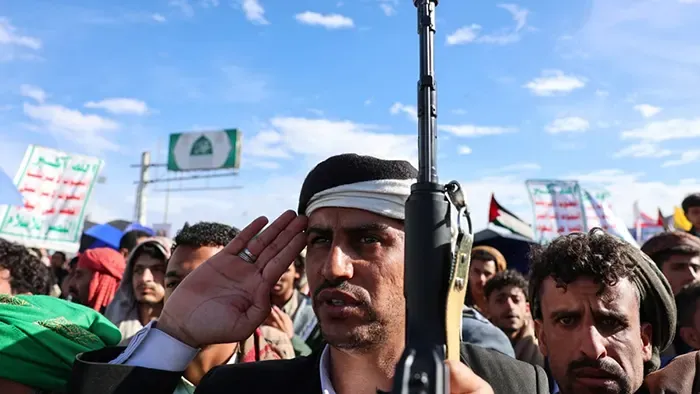
Iran has instructed Yemen’s Houthi rebel group to be prepared to block the vital Red Sea oil shipping route should the United States attack Iran’s power infrastructure. Three sources familiar with the matter disclosed this information to Reuters on Thursday (July 16).
According to the sources, discussions regarding this matter took place among Iran’s top leadership, and the message was conveyed to their Houthi allies. Two senior Iranian officials and a regional source familiar with the situation—speaking on condition of anonymity—stated that Tehran’s request had recently reached the Houthis.
However, they did not provide details on how the message was transmitted or whether it was sent before or after US President Donald Trump’s threat on Tuesday. Neither the Iranian Foreign Ministry nor a spokesperson for the Houthi group immediately responded to Reuters’ requests for comment on the matter.
Deployment of Drones and Missiles Near the Bab al-Mandab Strait
A source close to the Houthis revealed that the group has completed all preparations to attack ships by deploying missiles and drones near the Bab al-Mandab Strait—the gateway to the Red Sea—specifically in Yemen’s Hodeidah region and the mountainous areas bordering the Gulf of Aden. They are now merely awaiting orders.
Analysts observe that since the Strait of Hormuz is already effectively closed, if the Houthis were to launch attacks on ships or ports in the Red Sea, both of the Middle East’s primary oil export routes would be paralyzed simultaneously. This scenario raises the prospect of an intensified global energy crisis.
The source further claimed that representatives of Iran’s Islamic Revolutionary Guard Corps (IRGC) stationed in Yemen would make the final decision regarding when to close the Bab al-Mandab Strait.
Saudi-Houthi Tensions Escalate Again
In another sign of rising tensions in the region, the Houthis fired a missile at Saudi Arabia on Monday, alleging an attack on an airport controlled by the Kingdom. This action effectively shattered the ceasefire between Saudi Arabia and the Houthis that had been in place for nearly four years. Torbjorn Soltvedt, the Middle East analyst at risk consultancy Verisk Maplecroft, describes the recent flare-up in hostilities between Saudi Arabia and the Houthis as deeply concerning.
He notes that if the conflict escalates further and spreads to Red Sea oil export infrastructure and shipping lanes, the only major alternative route for oil exports from the Middle East would also be jeopardized.
Two regional sources close to Riyadh indicate that Saudi Arabia is treating the threats posed by Iran and the Houthis with great seriousness. They believe the Houthis are now coordinating more closely with Iran regarding the Red Sea issue.
Fears of a New Energy Market Crisis
Iran closed the Strait of Hormuz following attacks by the US and Israel on February 28. Prior to the conflict, approximately 20 percent of the world’s total energy supply was transported via this route.
Subsequently, Saudi Arabia diverted significant quantities of oil through pipelines toward the Red Sea. Currently, about 7 percent of the global energy supply passes through this waterway.
During the Gaza war, Houthi attacks forced many international shipping companies to reroute vessels around Africa—a much longer and costlier journey—instead of using the Red Sea.
Saudi Arabia currently exports about 70 percent of its energy through the Red Sea port of Yanbu. Consequently, any attack on this route could trigger major volatility in global oil markets.
According to a regional source, pressuring the US by straining the global economy is part of Iran’s strategy. Tehran aims to increase pressure on Washington by threatening shipping in the Red Sea and Saudi oil exports.
The source claims that closing the Bab al-Mandab Strait would not be difficult; shipping could be disrupted by anyone armed with a rifle. Sophisticated missiles are not even required for such an action, he added.
Conflicting US-Iran Stances on the Houthis
Iran regards the Houthi group as part of its regional “Axis of Resistance.” This alliance also includes Lebanon’s Hezbollah and several Shia armed groups in Iraq. However, the Houthis have not yet formally participated directly in the US-Iran conflict. The US alleges that Iran supports the Houthis with weapons, funds, and training, and that this assistance is channeled through Hezbollah; Tehran, however, has consistently denied these allegations.