By awarding a massive $12 billion contract to a German consortium just ahead of the NATO summit, Canada is not merely modernizing its navy but also signaling a major strategic shift in global geopolitics. After months of intense competition, Germany’s ThyssenKrupp Marine Systems (TKMS) secured the deal—beating out South Korea’s Hanwha Ocean—with total costs, including maintenance, potentially exceeding $70 billion over the next half-century.
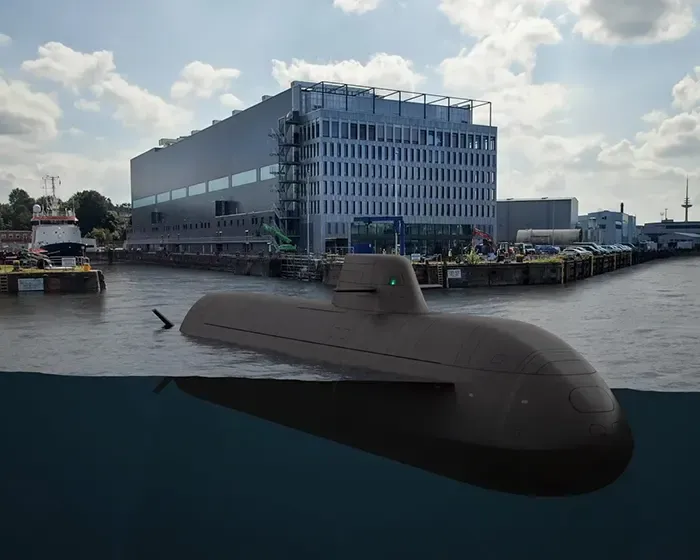
This announcement comes at a time when Canada’s current submarine fleet has become almost entirely inoperable; three of the four second-hand “Victoria-class” submarines purchased from Britain in 1998 are currently sitting in dockyards for maintenance. Consequently, this historic decision to acquire new vessels—the first time in the country’s history it is buying brand-new submarines—was crucial for safeguarding its maritime borders. A primary driver behind this massive military expenditure lies in the escalating tensions within the Arctic region. As climate change causes Arctic ice to melt, Russia and China are increasingly eyeing the region’s strategic shipping lanes and vast mineral resources. Germany’s 212CD model submarines feature state-of-the-art stealth technology, allowing them to navigate underwater virtually silently. Canada intends to leverage this technology to conduct long-term surveillance missions—evading enemy detection—along sensitive and contested routes like the Northwest Passage. Furthermore, this deal enables Canada to meet the long-standing demand from allies—particularly the United States—to allocate 2% of its GDP to defense, a milestone it has now reached, alongside a pledge to raise that figure to 5% by 2035. Despite the fact that South Korean submarines are larger and capable of carrying powerful weaponry, Ottawa’s decision to choose Germany was driven by considerations of NATO interoperability and long-term economic strategy.
As a major supplier to NATO, Germany produces submarines that integrate seamlessly with the naval fleets of allied nations—a feat that would have been more complex with South Korean vessels, given that South Korea is not a NATO member. Furthermore, amidst recent fluctuations in US politics and diplomatic tensions, Canada is shifting its focus toward European partners for defense needs rather than relying solely on the United States. Under this agreement, Germany is not merely supplying military hardware; it has also pledged significant investments in Canada’s local economy, specifically in artificial intelligence, battery manufacturing, and the mining sector. Canada anticipates that this fifty-year partnership will not only safeguard its sovereignty in the Arctic but also provide a long-term boost to its domestic industrial sector.