Algeria 3–3 Austria
Spectators in the stands at Kansas City sensed something was about to happen. But what? No one knew.
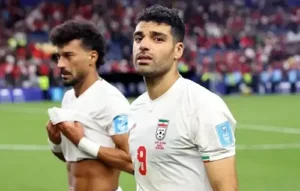
What ultimately unfolded was not merely a match—it was high drama. And the final scene of that drama was scripted by time itself, in the 96th minute. Austria 3, Algeria 3. Meanwhile, somewhere far away, Iran quietly bowed out while watching on TV.
The arithmetic before the match was simple. Both teams were level on three points; a draw would guarantee both a spot in the Round of 32. It was this straightforward equation that seemed to cast an uneasy shadow over the match.
Many suspected a “collusive draw”—that invisible pact seen so often in football history. The specter of the 1982 “Disgrace of Gijón” seemed to loom over the proceedings. Yet, once on the pitch, Austria and Algeria dispelled those doubts with defiance. This was no compromise; it was a battle.
Austria struck the first blow. In the 28th minute, they scored with their very first shot on target. David Alaba delivered a long pass—straight as an arrow—flying forward. Marko Arnautović timed his run to perfection, as if his feet were synchronized with the ticking of a clock. His first touch wasn’t flawless, but a moment of hesitation and a split-second error by Oussama Benbot gave him the opening he needed to put the ball in the net.
The crowd hadn’t even fully erupted in celebration before Algeria struck back.
It was the dying moments of the first half. Riyad Mahrez kept the ball in play on the right flank. Then came Rafik Belghali—a defender by trade, but in that moment, an artist. He dribbled past three opponents, cut inside, and unleashed a left-footed shot to make it 1–1.
The match was turning into a compelling story. Austria took the lead again in the second half; in the 55th minute, a header from Konrad Laimer dropped the ball right in front of Marcel Sabitzer. A shot on the first touch from 18 meters out—2-1.
But in this match, a ‘lead’ meant nothing.
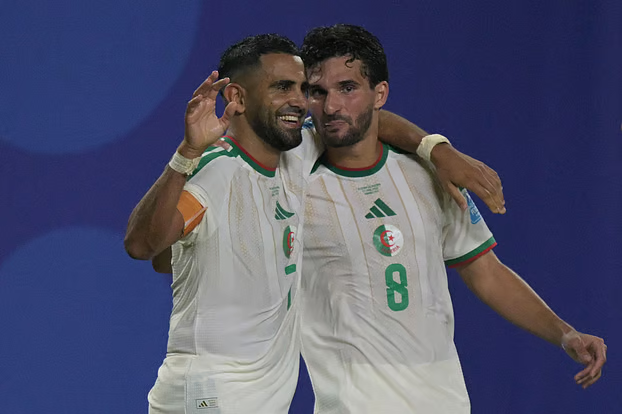
Just five minutes later, Houssem Aouar surged down the left flank; his movement was as fluid as a desert breeze. Mahrez received the cutback and unleashed a curling shot—like a stroke of calligraphy—sending the ball into the top corner. 2-2.
A strange murmur rippled through the stadium. Whistles, low chatter, and spectators beginning to leave—thinking, perhaps, that the match had run its course. But football sometimes mocks human expectations.
The clock was ticking down. Then, in stoppage time, an explosion of emotion. Mahrez scored. The Algerian captain ran with arms outstretched as his teammates swarmed him. 3-2. It seemed like the final scene.
But the story wasn’t over yet.
Austria launched one last attack—like someone sprinting to catch the last train. Sasa Kalajdzic, a substitute who had been on the pitch for mere seconds, rose for a header. The ball found the net. 3-3. The match clock showed 96 minutes.
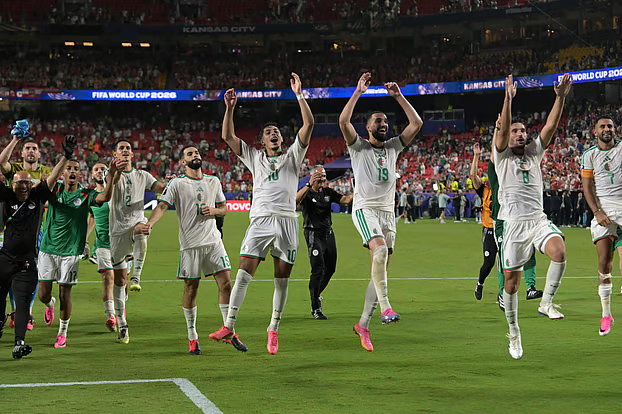
In that single minute, the fates of three nations shifted.
Austria advanced to the knockout stage to face Spain. Algeria also survived, qualifying as one of the best third-placed teams—setting up a clash with Switzerland. And Iran? Nothing remained for them but sighs and regrets.
This match proves that football is never merely a game of calculations. Here, equations are shattered, and plans torn apart. The game lives on even after the 90 minutes are up—in a header, a mistake, or a sprint. And within that continued life lies a certain cruelty.
Some celebrate. Others quietly switch off the TV. That is precisely where football is at its most real.